Zinn Hub vs Fiverr

In Zinn Hub's own words.
Looking for a gig marketplace where more of your money stays yours and language stops getting in the way? Zinn Hub is the newer option, designed around fairer fees and translation across 46 languages. Fiverr is the bigger, longer-running marketplace, where sellers hand over 20% of each order and buyers add a service fee. Zinn Hub asks buyers for no platform fee, and lets sellers keep their first $500.
Where Zinn Hub stands out
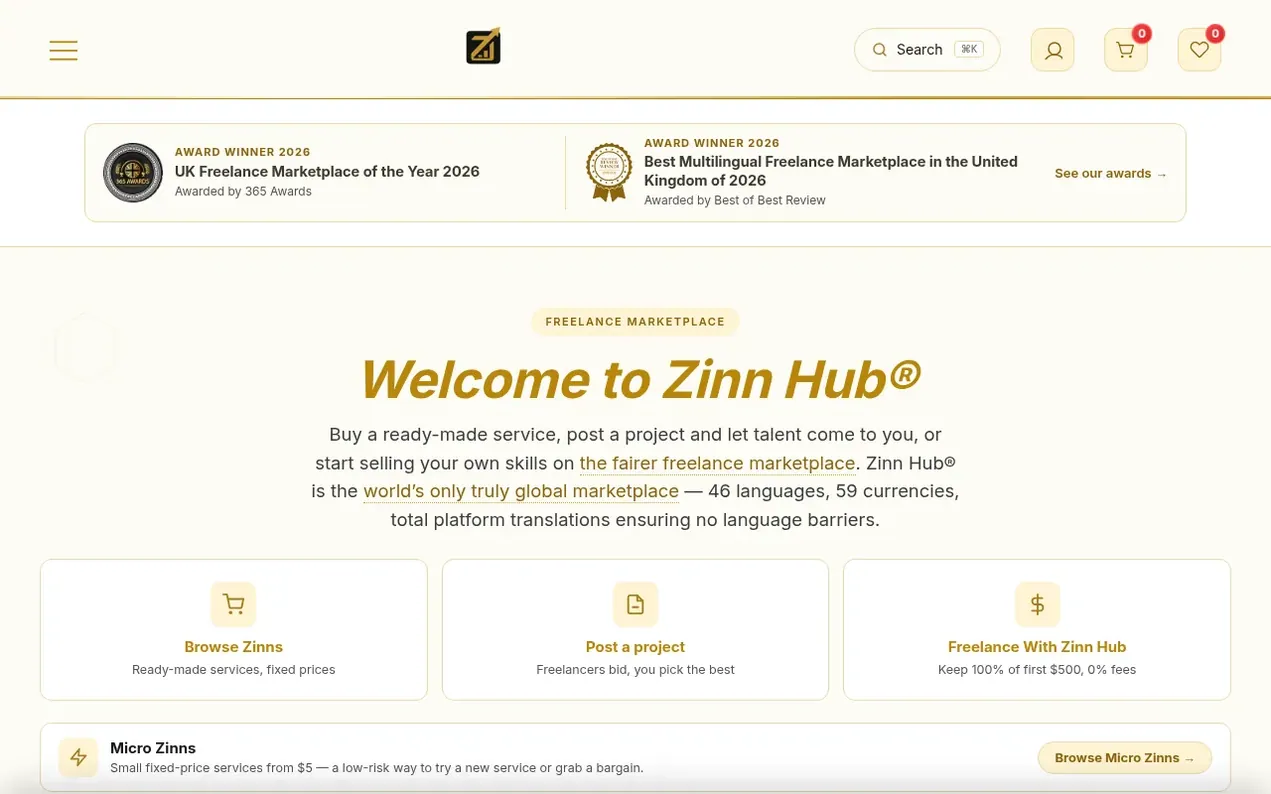
Buyers are not charged any platform fee.
A seller's first $500 stays entirely theirs, at 100%.
Past that point, the cut Zinn Hub takes drops to 8%, or 7% for Agency.
Bidding with proposals costs nothing, and no purchase is needed beforehand.
Listings, chat, reviews and text inside images are translated in both directions across 46 languages.
Live calls offer either captions or a translated voice that speaks aloud.
Zinn Hub adds no fee on payouts, and every listing can be paid in crypto.
Freelancers must pass an identity check and a skill check before they are allowed to list.
Where Fiverr is strong
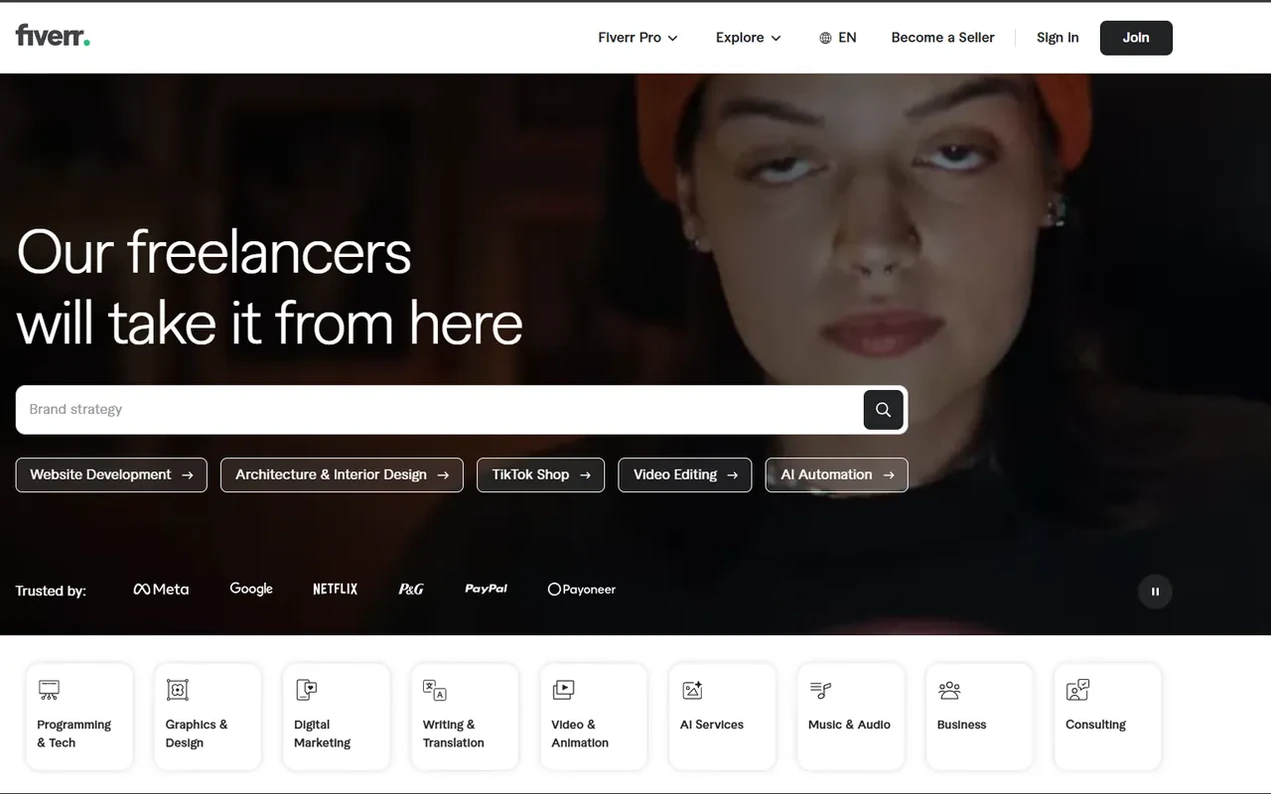
Fiverr has been around longer and is a well-established platform.
Its history holds more orders and more reviews.
Differences
Fiverr removes 20% from the seller on each order, while Zinn Hub begins at 0% on the first $500 and later settles at 8%.
Fiverr layers a service fee onto the buyer, whereas Zinn Hub bills buyers nothing.
Fiverr puts English first, while Zinn Hub translates listings, chat, reviews and calls in 46 languages.
Fiverr is built as a gig shop, while Zinn Hub adds project briefs, a directory and live calls too.
Fiverr may charge when you withdraw, but Zinn Hub puts no fee on payouts and accepts crypto on every listing.
Fiverr is the older site and holds a bigger backlog of orders and reviews.
Before a freelancer can list on Zinn Hub, both identity and skill are checked.
Fiverr means paying for the privilege of an old platform; Zinn Hub lets you keep more, with language no longer a barrier.